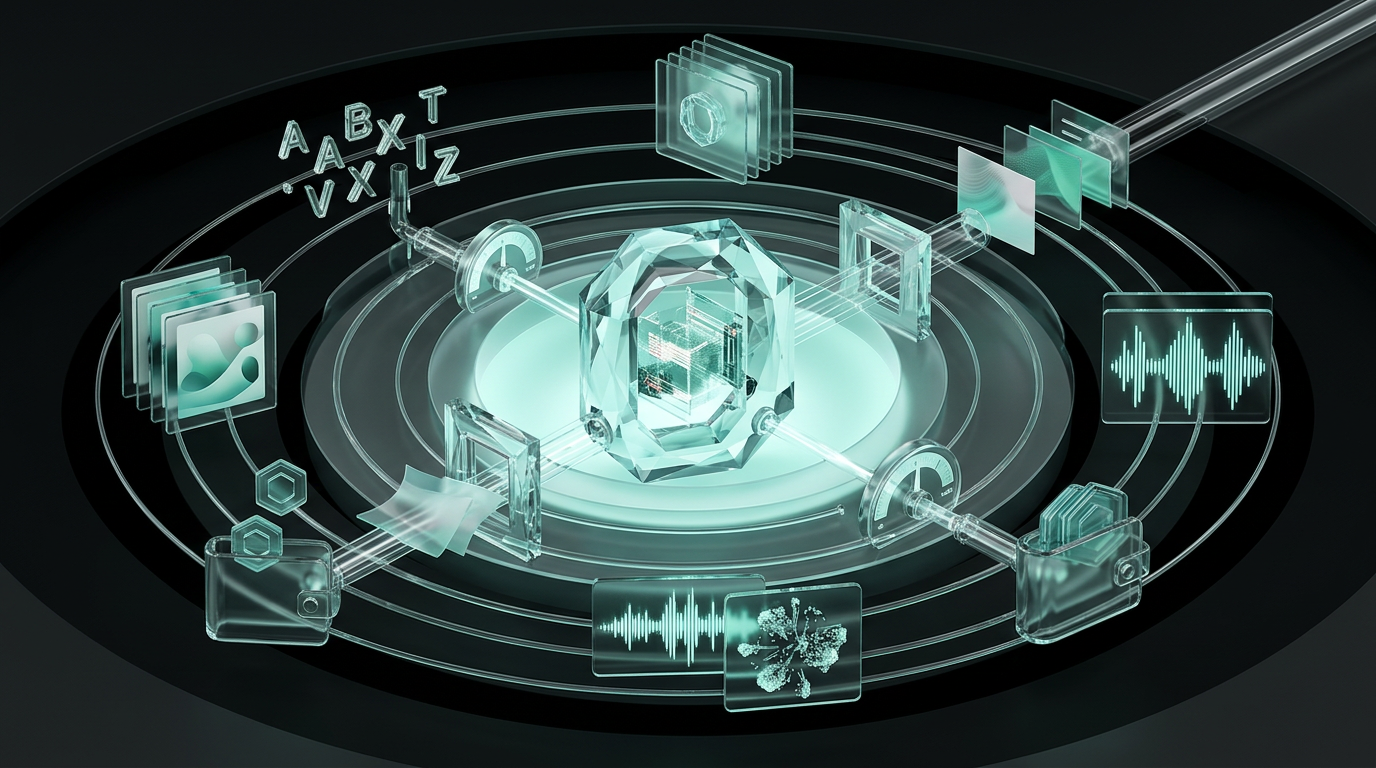
AI applications are no longer only chat boxes. A serious product may summarize documents, generate product images, turn prompts into short videos, transcribe audio, create embeddings for search, and route support conversations through different model families. If every capability uses a separate provider account and a separate integration, the product becomes hard to maintain before it becomes successful.
A multimodal AI API strategy solves this by treating text, image, video, audio, embeddings, and model experiments as parts of one operating system. The application calls a consistent gateway, while the platform handles the provider-specific details behind it.
Start with the user journey. A marketplace may need image generation for product visuals, embeddings for search, chat completions for support, and audio transcription for seller messages. A SaaS analytics product may need long-context reasoning, chart explanations, document parsing, and batch embeddings. These are different modalities, but the team should not need five disconnected billing and logging systems.
Omixa gives teams one model catalog and one API workspace for these workflows. Developers can test chat, image, audio, video, music, and embedding endpoints from the same environment. Admins can see wallet balance, route health, request cost, and model usage without hunting across provider dashboards.
The SEO opportunity is clear because users search by the exact job they need: image generation API, video generation API, audio API, embeddings API, chat completions API, and all AI models API. A useful platform should answer those searches with real operational value, not only a list of model names.
The best multimodal stack also keeps cost visible. Some tasks need the strongest model. Others need a fast or cheaper route. Some media jobs should be isolated from chat traffic. With a gateway approach, teams can choose the right model for the job and keep spend attached to each request.
If you are building an AI product, the goal is not to collect provider SDKs. The goal is to give your product one reliable path to every useful modality, with billing, routing, documentation, and failover already handled. That is where a unified AI API gateway becomes a growth advantage.
The multimodal AI API stack: text, image, video, audio, and embeddings
How to design one AI API workflow for chat, image generation, video generation, audio, embeddings, and model experimentation.